Picture this: You’ve just launched a brilliant email marketing campaign that’s converting like crazy in the US market. Sales are pouring in, your open rates are through the roof, and everything seems perfect. Then you get a notification from your European customers—or worse, a legal notice about GDPR violations that could cost your company up to 4% of annual revenue.
This nightmare scenario plays out more often than you’d think. In our interconnected digital economy, email marketers can’t afford to think locally anymore. Whether you’re a startup in Silicon Valley or an enterprise in New York, your emails are crossing borders, and each jurisdiction comes with its own maze of compliance requirements.
The challenge isn’t just understanding these laws—it’s implementing systems that ensure compliance across multiple jurisdictions without killing your marketing effectiveness. That’s where strategic email validation becomes not just a best practice, but a legal necessity.
The Global Email Compliance Landscape: More Complex Than Ever
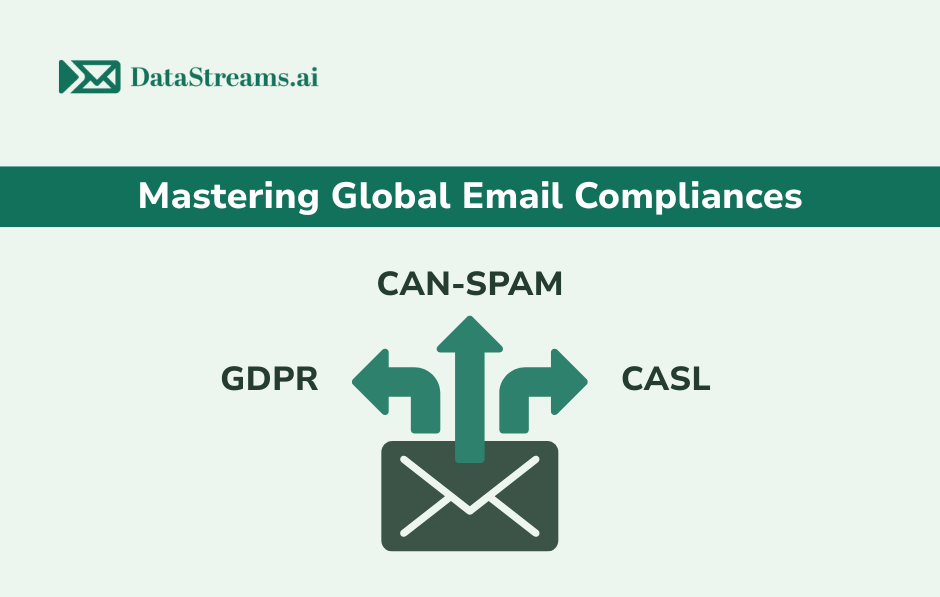
Email marketing compliance has evolved from simple “unsubscribe” links to sophisticated frameworks governing everything from consent mechanisms to data processing transparency. Today’s marketers must navigate at least three major regulatory environments simultaneously:
GDPR (General Data Protection Regulation) affects any business processing personal data of EU residents, regardless of where your company is located. With fines reaching €20 million or 4% of global annual revenue (whichever is higher), GDPR isn’t just European law—it’s global business reality.
CAN-SPAM Act remains the cornerstone of US email marketing law, but its requirements often conflict with GDPR’s stricter consent standards. While CAN-SPAM allows opt-out mechanisms, GDPR demands explicit opt-in consent.
CASL (Canada’s Anti-Spam Legislation) adds another layer of complexity with some of the world’s strictest consent requirements and penalties up to CAD $10 million for organizations.
The real challenge? These laws don’t just coexist—they often contradict each other, creating compliance gaps that can expose businesses to significant legal and financial risks.
GDPR Email Compliance: Beyond the Basics
Most marketers know GDPR requires consent, but the devil is in the details. Here’s what actually matters for email marketing compliance:
Lawful Basis for Processing
GDPR recognizes six lawful bases for processing personal data, but for email marketing, you’re primarily looking at:
- Consent: Must be freely given, specific, informed, and unambiguous
- Legitimate interests: Only viable for existing customer relationships and requires careful balancing tests
The Consent Challenge
Pre-checked boxes don’t count. Bundled consent doesn’t work. Your consent mechanism must be as easy to withdraw as it was to give. This means implementing granular consent management that tracks:
- When consent was given
- How consent was obtained
- What specific processing activities were consented to
- Any changes or withdrawals of consent
Data Minimization in Practice
You can only collect and process email addresses that are necessary for your specified purposes. This seemingly simple requirement has profound implications for email validation strategies. Invalid or inactive email addresses that you’re no longer using for legitimate business purposes could be considered excessive data retention.
This is where robust email validation becomes crucial for GDPR compliance. By regularly validating your email lists and removing invalid addresses, you’re not just improving deliverability—you’re demonstrating data minimization practices that regulators expect to see.
CAN-SPAM: The American Approach
CAN-SPAM takes a different philosophical approach than GDPR. Instead of requiring prior consent, it focuses on transparency and providing recipients with clear opt-out mechanisms. Key requirements include:
Header Information Accuracy
Your “From,” “To,” and routing information must be accurate and identify the business sending the email. This includes:
- Using legitimate email addresses that can receive replies
- Ensuring your sending domain reputation aligns with your business identity
- Maintaining consistent sender information across campaigns
Clear Identification
Recipients must be able to immediately identify who sent the email and that it’s an advertisement (when applicable). This goes beyond just having your company name in the footer—it requires clear, prominent identification.
Opt-Out Mechanisms
You must provide a clear, conspicuous way for recipients to opt out, and you must honor these requests within 10 business days. But here’s where it gets tricky: you can’t require recipients to pay, provide information beyond their email address, or take more than sending a reply email or visiting a single webpage.
Physical Address Requirements
Every commercial email must include your valid physical postal address. For businesses operating across multiple jurisdictions, this requirement can interact complexly with GDPR’s data minimization principles.
CASL: Canada’s Strict Standards
CASL is often considered the world’s strictest anti-spam law, with requirements that go beyond both GDPR and CAN-SPAM:
Express Consent Requirements
CASL requires express consent for most commercial electronic messages. Implied consent exists in limited circumstances (existing business relationships, inquiries, etc.), but it’s not the reliable foundation that many businesses assume.
Identification and Contact Information
Every message must clearly identify the sender and provide valid contact information. Unlike CAN-SPAM’s physical address requirement, CASL allows for either a physical address or other contact information, but it must be monitored and responsive.
Unsubscribe Mechanisms
Similar to CAN-SPAM but with shorter timeframes—you must implement unsubscribe requests “without delay,” and the mechanism must be valid for at least 60 days after sending.
The Multi-Jurisdictional Compliance Challenge
Here’s where things get really complex. A single email campaign might need to comply with all three regulatory frameworks simultaneously. Consider this scenario:
You’re a US-based SaaS company with customers globally. Your email list includes:
- US prospects (CAN-SPAM applies)
- EU residents (GDPR applies regardless of their current location)
- Canadian subscribers (CASL applies)
- Subscribers from other countries with their own emerging regulations
Each segment requires different consent mechanisms, opt-out procedures, and data handling practices. Trying to manage this manually is not just inefficient—it’s a compliance disaster waiting to happen.
Email Validation: Your Compliance Safety Net
This is where strategic email validation becomes essential for multi-jurisdictional compliance. Here’s how proper email validation supports compliance across all three frameworks:
GDPR Data Minimization
Regular email validation helps ensure you’re only retaining email addresses that serve legitimate business purposes. Invalid, inactive, or abandoned email addresses represent unnecessary data retention that could trigger GDPR violations.
Modern email validation services like DataStreams.ai don’t just check if an email address is valid—they provide detailed insights into email quality, helping businesses make informed decisions about data retention and processing.
CAN-SPAM Deliverability Requirements
While CAN-SPAM doesn’t explicitly require email validation, its provisions about header accuracy and legitimate sending practices create implicit validation requirements. Sending to invalid addresses can damage your sender reputation, making it harder to comply with CAN-SPAM’s requirement that your emails reach recipients who want them.
CASL’s Business Relationship Standards
CASL’s implied consent provisions often depend on existing business relationships. Invalid email addresses can complicate your ability to demonstrate these relationships, especially when dealing with enforcement inquiries.
Building a Compliance-First Email Strategy
Successful multi-jurisdictional compliance requires more than just understanding the law—it requires building compliance into your email infrastructure from the ground up.
Implement Granular Consent Management
Your email platform should track not just whether someone consented, but:
- When they consented
- How they consented (which form, campaign, etc.)
- What they consented to (specific types of emails)
- Any changes to their consent over time
Design Jurisdiction-Aware Campaigns
Different subscribers may require different treatments based on their jurisdiction. This might mean:
- Separate opt-in processes for EU vs. US subscribers
- Different unsubscribe mechanisms based on applicable law
- Jurisdiction-specific data retention policies
Regular Compliance Audits
Email compliance isn’t a set-it-and-forget-it process. Regular audits should examine:
- Consent documentation and procedures
- Data retention practices
- Email validation and list hygiene
- Opt-out mechanism effectiveness
- Cross-border data transfer procedures
The Role of Advanced Email Validation
Traditional email validation focused on syntax checking and basic deliverability. Today’s compliance requirements demand more sophisticated validation that can:
Identify Risk Profiles
Not all email addresses carry the same compliance risk. Advanced validation can identify:
- Disposable email addresses that may indicate GDPR consent issues
- Role-based addresses that may not represent individual consent
- High-risk domains associated with compliance violations
Support Data Retention Decisions
Validation results can inform data retention policies by identifying:
- Email addresses that are no longer active (potential excessive retention)
- Addresses with engagement patterns that support legitimate interest claims
- Risk indicators that might trigger enhanced consent verification
Enable Proactive Compliance Management
Rather than waiting for compliance issues to arise, advanced validation enables proactive management by:
- Flagging potential compliance risks before they become violations
- Providing documentation to support compliance defenses
- Enabling automated compliance workflows
DataStreams.ai’s email validation platform addresses these advanced compliance needs by providing detailed validation results that go beyond simple pass/fail determinations. Our API returns comprehensive data about email deliverability, risk factors, and engagement potential—giving businesses the insights they need to make compliance-informed decisions about their email marketing.
Practical Implementation: A Step-by-Step Approach
Building compliant email marketing across multiple jurisdictions doesn’t happen overnight. Here’s a practical roadmap:
Phase 1: Assessment and Planning (Weeks 1-2)
- Audit your current email practices against GDPR, CAN-SPAM, and CASL requirements
- Identify compliance gaps and prioritize remediation efforts
- Evaluate your current email validation processes and tools
Phase 2: Infrastructure Development (Weeks 3-6)
- Implement jurisdiction-aware consent management
- Upgrade email validation to support compliance requirements
- Develop documentation and audit trails for compliance demonstration
Phase 3: Process Integration (Weeks 7-10)
- Train teams on new compliance procedures
- Integrate validation and compliance checks into campaign workflows
- Establish regular compliance monitoring and reporting
Phase 4: Optimization and Scaling (Ongoing)
- Monitor compliance effectiveness and adjust procedures
- Stay current with regulatory changes and enforcement trends
- Continuously improve validation accuracy and compliance integration
Common Compliance Pitfalls and How to Avoid Them
Even well-intentioned businesses make compliance mistakes. Here are the most common pitfalls and how to avoid them:
Assuming One-Size-Fits-All Solutions
The Mistake: Using the same consent mechanism and email practices for all subscribers regardless of jurisdiction.
The Fix: Implement jurisdiction-aware systems that apply appropriate compliance standards based on subscriber location and applicable law.
Neglecting Email Validation in Compliance Planning
The Mistake: Treating email validation as purely a deliverability issue rather than a compliance requirement.
The Fix: Integrate validation results into compliance decision-making and use validation data to support data minimization and consent verification efforts.
Inadequate Documentation
The Mistake: Failing to maintain detailed records of consent, validation results, and compliance decisions.
The Fix: Implement comprehensive logging and documentation systems that can support compliance defenses and regulatory inquiries.
Reactive Rather Than Proactive Compliance
The Mistake: Waiting for compliance issues to arise before addressing them.
The Fix: Build compliance monitoring and validation into regular business processes, using tools like DataStreams.ai to identify and address potential issues before they become violations.
The Future of Email Compliance
Email compliance is becoming more complex, not less. Emerging trends include:
Increased Regulatory Coordination
Regulators are increasingly coordinating enforcement efforts across jurisdictions, making compliance failures more likely to trigger multi-jurisdictional investigations.
AI and Automated Enforcement
Regulatory authorities are developing AI-powered tools to identify compliance violations automatically, making traditional “fly under the radar” strategies ineffective.
Stricter Consent Requirements
New regulations are implementing even stricter consent requirements, with some jurisdictions considering active, periodic consent verification.
Enhanced Individual Rights
Individuals are gaining stronger rights to data portability, explanation, and automated decision-making transparency—all of which affect email marketing practices.
Technology Solutions for Compliance Scalability
Managing multi-jurisdictional compliance manually isn’t sustainable for growing businesses. Technology solutions that can help include:
API-First Validation Platforms
Modern email validation APIs like DataStreams.ai enable real-time compliance checking integrated directly into your email workflows. Instead of batch processing lists after collection, you can validate emails at the point of collection and make immediate compliance decisions.
Compliance Management Systems
Dedicated platforms for managing consent, data retention, and regulatory compliance provide the infrastructure needed for scalable compliance management.
Automated Workflow Integration
Tools that integrate compliance checking into existing marketing automation workflows ensure that compliance becomes a natural part of your email marketing process rather than an additional burden.
Measuring Compliance Success
Compliance isn’t just about avoiding penalties—it’s about building sustainable, effective email marketing practices. Key metrics for measuring compliance success include:
Compliance Coverage
- Percentage of email addresses with verified compliance status
- Time to compliance resolution for identified issues
- Audit trail completeness and accuracy
Operational Efficiency
- Reduction in manual compliance tasks
- Integration effectiveness with existing workflows
- Team training and adoption success
Business Impact
- Email deliverability improvements from better list hygiene
- Reduced legal and regulatory risk exposure
- Enhanced customer trust and engagement
Making the Business Case for Compliance Investment
Compliance initiatives often face budget scrutiny, but the business case is compelling:
Risk Mitigation
- GDPR fines average €114 million for major violations
- CAN-SPAM penalties can reach $43,792 per violation
- CASL fines can reach CAD $10 million for organizations
Operational Benefits
- Improved email deliverability from better list hygiene
- Reduced customer service burden from compliance-related inquiries
- Enhanced brand reputation and customer trust
Competitive Advantage
- Compliance readiness enables faster expansion into new markets
- Better data practices improve marketing effectiveness
- Regulatory compliance becomes a competitive differentiator
Conclusion: Building Sustainable Compliance for the Future
Email marketing compliance across multiple jurisdictions isn’t just a legal requirement—it’s a strategic imperative for businesses that want to scale globally. The complexity of managing GDPR, CAN-SPAM, CASL, and emerging regulations simultaneously requires more than good intentions; it requires systematic, technology-enabled approaches that make compliance a natural part of your email marketing operations.
The key is building compliance into your infrastructure from the beginning rather than bolting it on afterward. This means choosing email validation solutions that understand compliance requirements, implementing consent management systems that scale across jurisdictions, and developing processes that make compliance verification automatic rather than manual.
DataStreams.ai’s email validation platform is designed specifically for businesses facing these multi-jurisdictional compliance challenges. Our API provides the detailed validation results and compliance insights you need to make informed decisions about email marketing across global markets. Whether you’re validating emails at the point of collection or auditing existing lists for compliance risks, our platform gives you the data and confidence you need to scale your email marketing while maintaining full regulatory compliance.
The future belongs to businesses that can navigate regulatory complexity while maintaining marketing effectiveness. By investing in robust email validation and compliance systems today, you’re not just avoiding penalties—you’re building the foundation for sustainable, global email marketing success.
Ready to build compliance into your email marketing infrastructure? Explore DataStreams.ai’s email validation solutions and discover how advanced validation can support your multi-jurisdictional compliance strategy while improving your email marketing results.
This article provides general information about email marketing compliance and should not be considered legal advice. Consult with qualified legal counsel for specific compliance guidance applicable to your business and jurisdictions.